Carpet face weight explained means understanding how much yarn sits on the surface of a carpet without confusing yarn quantity with structural durability. Carpet face weight explained also means separating showroom softness from long-term fiber performance under daily foot traffic. Most homeowners buy carpet by touching thick plush samples under bright showroom lighting, but carpet failure begins below the visible surface where pile height, fiber density, twist count, and polymer resilience determine structural stability.
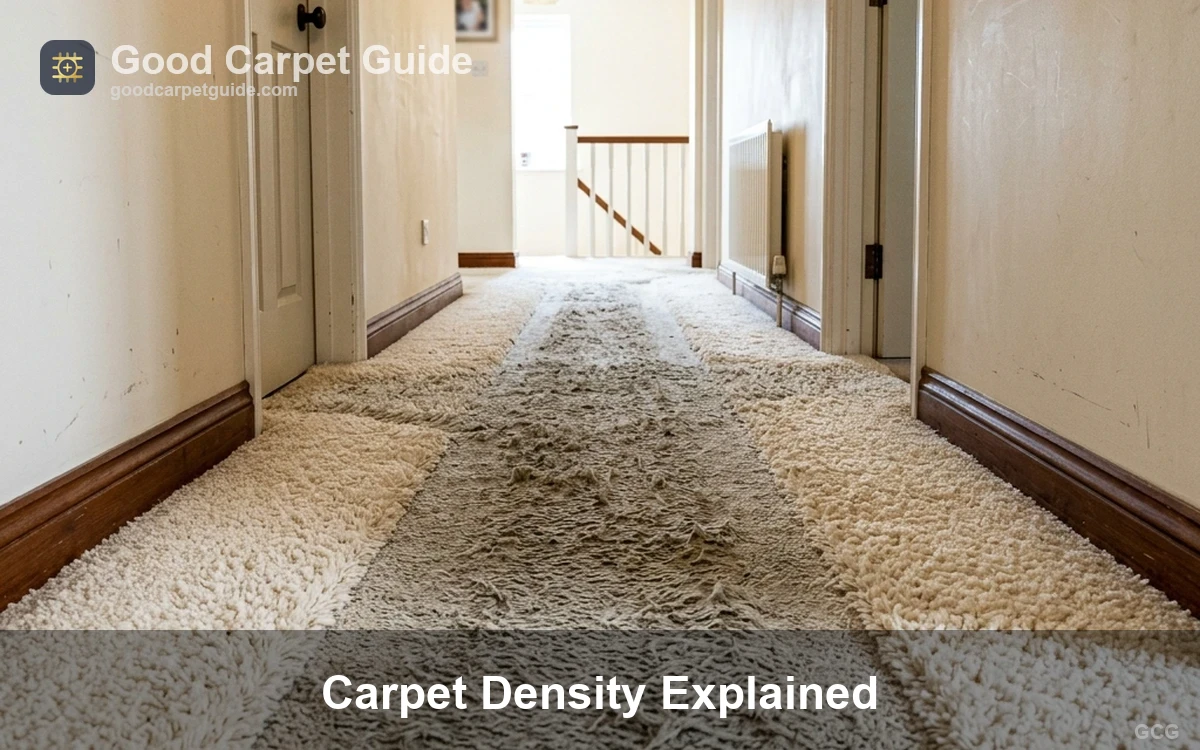
A 60-ounce polyester carpet looks luxurious during installation because the yarn mass creates visual fullness and deep cushioning. A 60-ounce polyester carpet also collapses rapidly if the fibers lack resilience, if the pile height remains too tall, or if the twist count stays too low. Installers repeatedly document heavy polyester carpets developing traffic lanes, crushed pile, and permanent matting within twenty-four to thirty-six months despite low household occupancy.
The residential carpet market created a profound disconnect between consumer perception and textile engineering realities. Big box retailers advertise face weight because face weight is easy to market. Professional installers calculate density ratios, inspect yarn twist, verify pile height, and analyze fiber chemistry before recommending any product for stairs, hallways, family rooms, or active households.
What Is Carpet Face Weight?
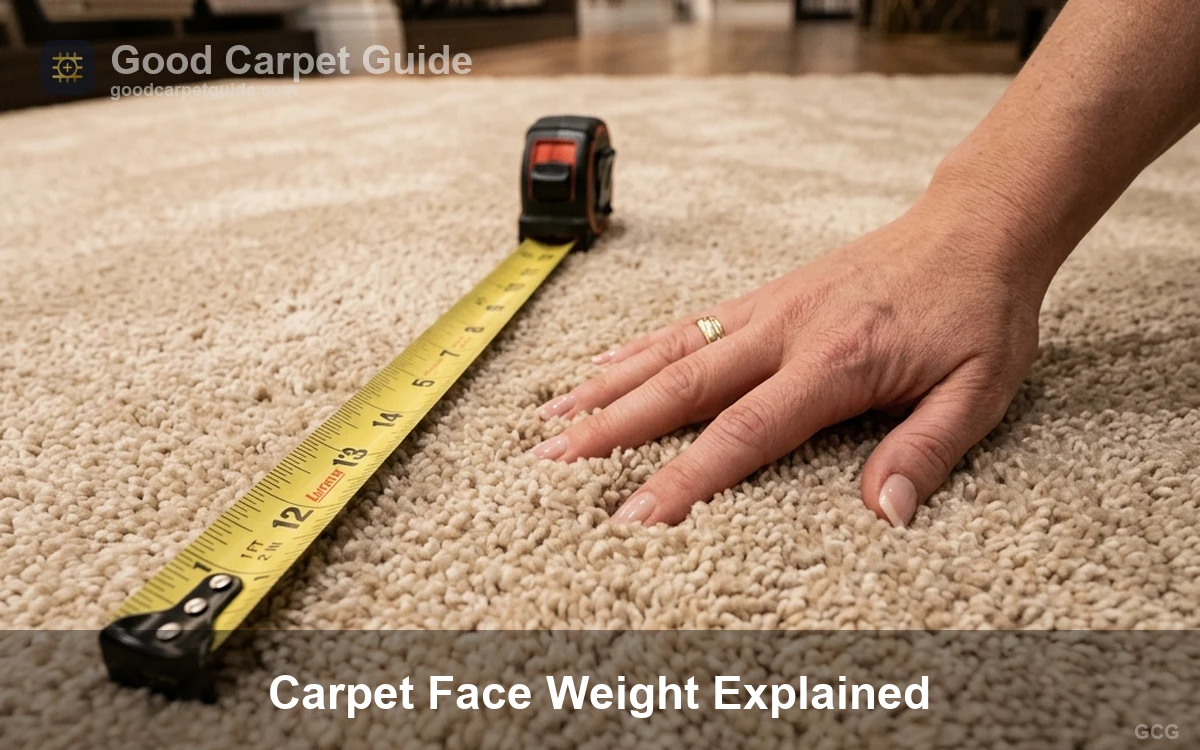
Carpet face weight is the measured weight of carpet fibers above the backing per square yard. Carpet face weight excludes the secondary backing, adhesive system, and attached cushion materials.
Manufacturers express carpet face weight in ounces per square yard. A 40-ounce carpet contains 40 ounces of exposed yarn fiber within one square yard of carpet surface. A 60-ounce carpet contains 60 ounces of exposed yarn fiber within the same area.
Face weight measures fiber quantity rather than performance quality. Face weight does not measure fiber resilience, density, twist integrity, polymer strength, or traffic resistance. One installer summarized the problem directly: “Face weight is a measure of quantity rather than performance.”
Retailers aggressively market face weight because consumers associate heavier materials with durability. Consumers make the same assumption in mattresses, towels, and upholstery fabrics. Carpet construction breaks that assumption because tall loose fibers increase weight while reducing structural compression resistance.
A high face weight carpet becomes durable only when the carpet combines:
- Maintaining high fiber density
- Maintaining short controlled pile height
- Maintaining high twist count
- Maintaining resilient polymer chemistry
- Maintaining stable backing integrity
A carpet lacking those structural factors fails regardless of face weight.
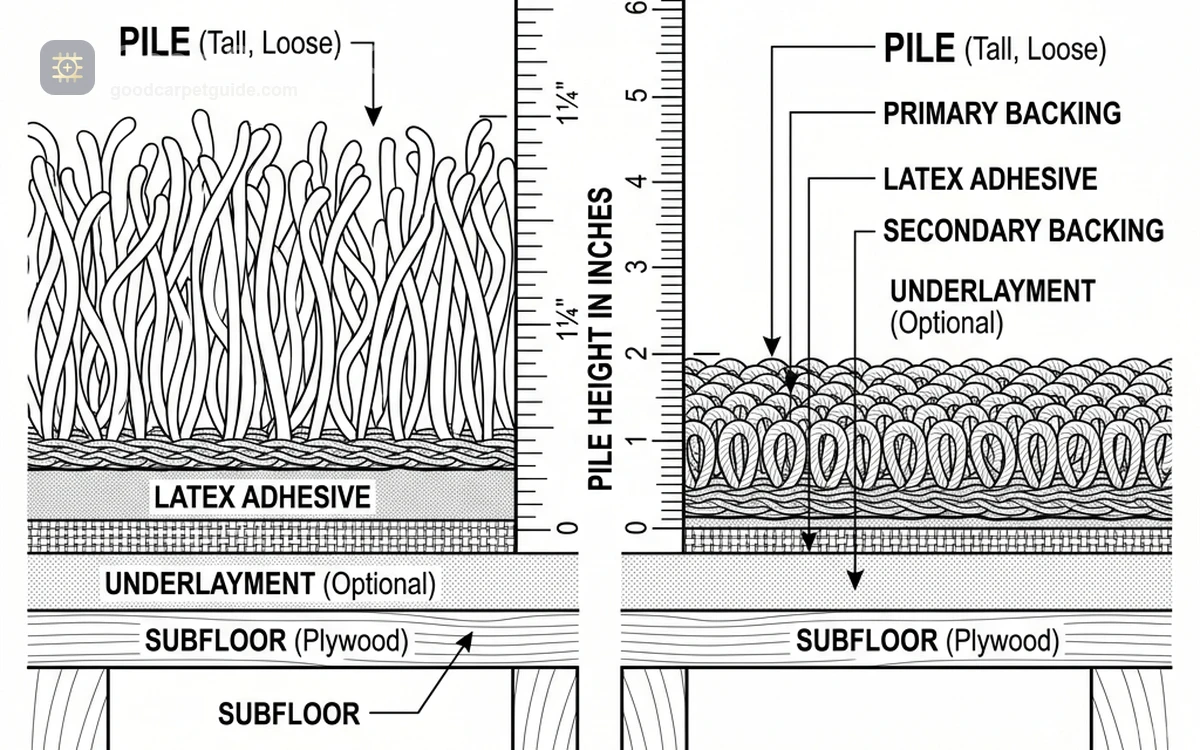
Tall pile height increases visible carpet face weight, while compact pile geometry increases fiber density and long-term traffic resistance inside residential flooring systems.
The 60-Ounce Trap: How High Face Weight Misleads Homeowners
The 60-ounce trap describes the residential carpet marketing strategy where manufacturers sell extremely heavy polyester carpets that feel luxurious initially but degrade rapidly under normal traffic conditions.
Big box flooring retailers heavily promote 60-ounce polyester because polyester fiber remains inexpensive to manufacture. Polyester carpet fiber commonly originates from recycled PET plastic feedstock, allowing mills to produce extremely thick yarn bundles at low production cost.
The economics create a deceptive showroom advantage. A retailer displays a thick 60-ounce polyester carpet beside a tighter 40-ounce nylon carpet. The consumer touches both surfaces. The polyester sample feels softer and deeper because the pile height remains taller and the yarn mass remains looser.
The structural performance reverses after installation.
One homeowner described the failure pattern clearly after installing DreamWeaver carpet from Engineered Floors:
“$6,000 Engineering Floors Dream Weaver carpet installed 13 months ago looks to be 5 years and there are just my wife and I in the house both retired, DO NOT BUY THIS PRODUCT.”
Another homeowner reported similar matting behavior from the Dream Weaver Reflections 5365 line:
“Paid $1600 and within a year matting that is unable to remove with vacuuming.”
Those complaints consistently involve thick polyester plush constructions with tall pile geometry and moderate density ratings. A typical DreamWeaver specification combines:
- 58.5-ounce face weight
- 0.63-inch pile height
- Density rating around 3,342
A 3,342 density rating remains structurally weak for active residential traffic despite the impressive face weight number.
The mechanical problem begins inside the yarn structure itself. Thick polyester fibers bend under repeated foot pressure. Polyester lacks the elastic molecular recovery system present inside nylon polymers. Once the polyester yarn bends beyond recovery tolerance, the fiber remains crushed permanently.
Heavy polyester also creates self-destructive downward loading. The weight of a 60-ounce polyester pile places continuous stress on the lower yarn bundle and backing interface. The extra yarn mass accelerates fiber spread, bloom, and matting.
Consumers frequently interpret visible matting as dirt accumulation. Consumers then over-vacuum or aggressively shampoo the carpet, creating secondary damage to the backing and fiber structure.
To gently lift matted pile and restore fiber loft without causing high-friction vacuum damage, professional installers recommend using a specialty carpet rake.
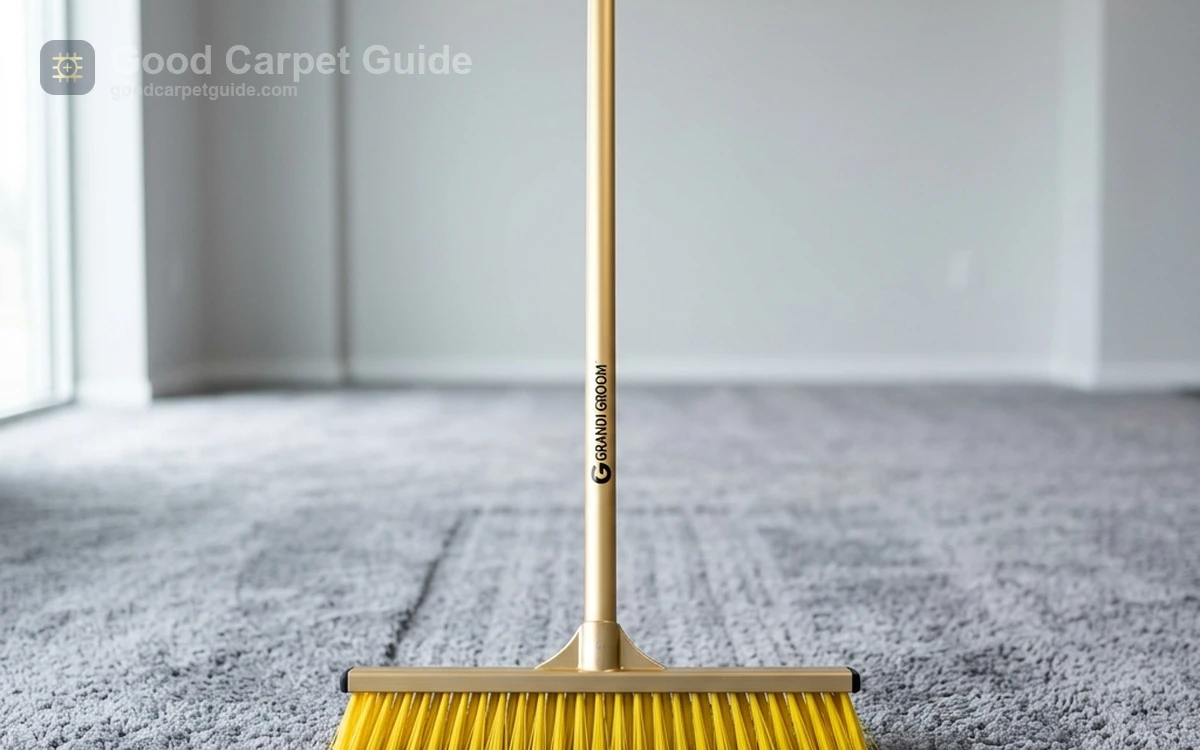
Grandi Groom Carpet Rake
The professional standard to revive matted high-traffic carpet pile. Gently lifts and aligns crushed fibers to restore original vertical structure and loft.
Check Price on AmazonFace Weight vs. Density: The Durability Equation
Face weight vs. density determines whether carpet fibers resist compression or collapse under traffic. Density measures how tightly the carpet yarn occupies physical space inside the pile structure.
Professional installers rely on a simple engineering equation:
The density formula reveals why heavy carpet frequently fails. A high face weight becomes structurally weak when pile height increases too far.
Consider two real-world construction examples.
Example 1: Heavy Plush Carpet
A 60-ounce carpet with a 0.75-inch pile height produces a density rating of only 2,880. A 2,880 density rating allows individual yarn bundles to bend deeply at the base during foot compression.
Example 2: Tighter Low-Pile Carpet
A 40-ounce carpet with a 0.25-inch pile height produces a density rating of 5,760. A 5,760 density rating tightly supports each yarn bundle and dramatically reduces fiber flex at the base.
The lighter carpet lasts substantially longer.
Professional installers prioritize density above face weight because density directly controls compression resistance. Density determines how effectively adjacent fibers support each other under repetitive loading cycles.
Installers commonly recommend:
- Maintaining 2,500–3,500 density for light bedrooms
- Maintaining 4,000–5,000 density for standard family rooms
- Maintaining 5,000+ density for stairs and hallways
- Maintaining 8,000+ density for maximum durability systems
One flooring professional summarized the relationship clearly:
“The most durable carpets have a 26oz. face weight and densities over 8,000.”
Consumers researching understanding carpet density ratings quickly discover that density predicts traffic resistance far more accurately than face weight marketing numbers.
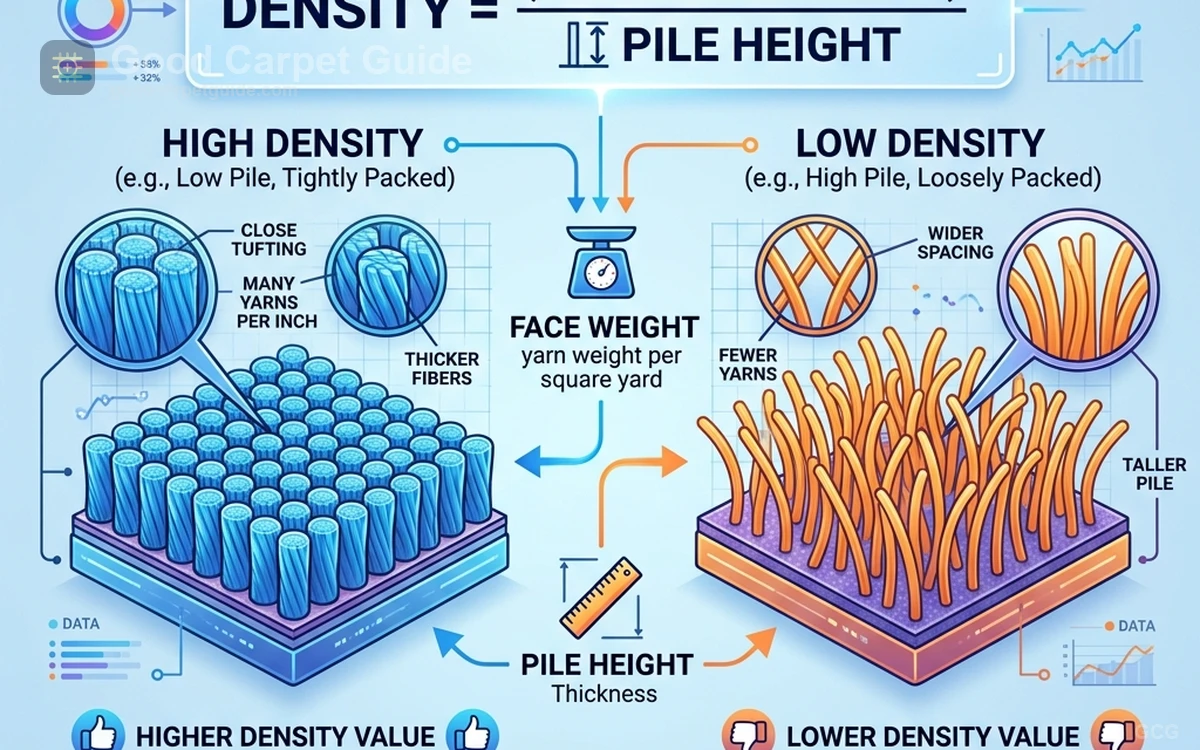
Carpet density calculations reveal why shorter compact pile structures resist traffic compression more effectively than taller high-face-weight plush constructions.
The Twist Count Factor: Why Blown Yarn Fails
Twist count measures how many times individual filaments rotate around each other within one inch of yarn length. Twist count determines whether carpet yarn maintains structural cohesion during repeated foot traffic.
High face weight means nothing if the yarn untwists under compression. Low-twist yarn spreads outward under traffic pressure and creates the fuzzy matted appearance installers call “blooming.”
Manufacturers create blown yarn by using:
- Increasing pile height
- Reducing twist tension
- Increasing filament bulk
- Increasing yarn softness
Blown yarn produces dramatic showroom softness. Blown yarn also loses definition rapidly after installation because loose fibers separate from the yarn bundle.
Installers commonly use these benchmarks:
- Maintaining 5 TPI for low-budget builder carpet
- Maintaining 6–7 TPI for moderate residential traffic
- Maintaining 8–9 TPI for active family rooms
- Maintaining 9+ TPI for premium traffic durability
A high-density carpet with low twist still fails. A high-twist carpet with weak density still mats. Durable carpet construction requires density and twist working together inside the same structural system.
Frieze carpet illustrates the relationship clearly. Frieze styles use aggressive twist levels that physically lock yarn filaments together. Frieze carpets maintain texture substantially longer than loose saxony plush designs despite frequently using lower face weight totals.
Consumers shopping for durable options for busy hallways should inspect twist count before touching pile softness.
Nylon vs. Polyester: Why Less Weight Often Equals More Longevity
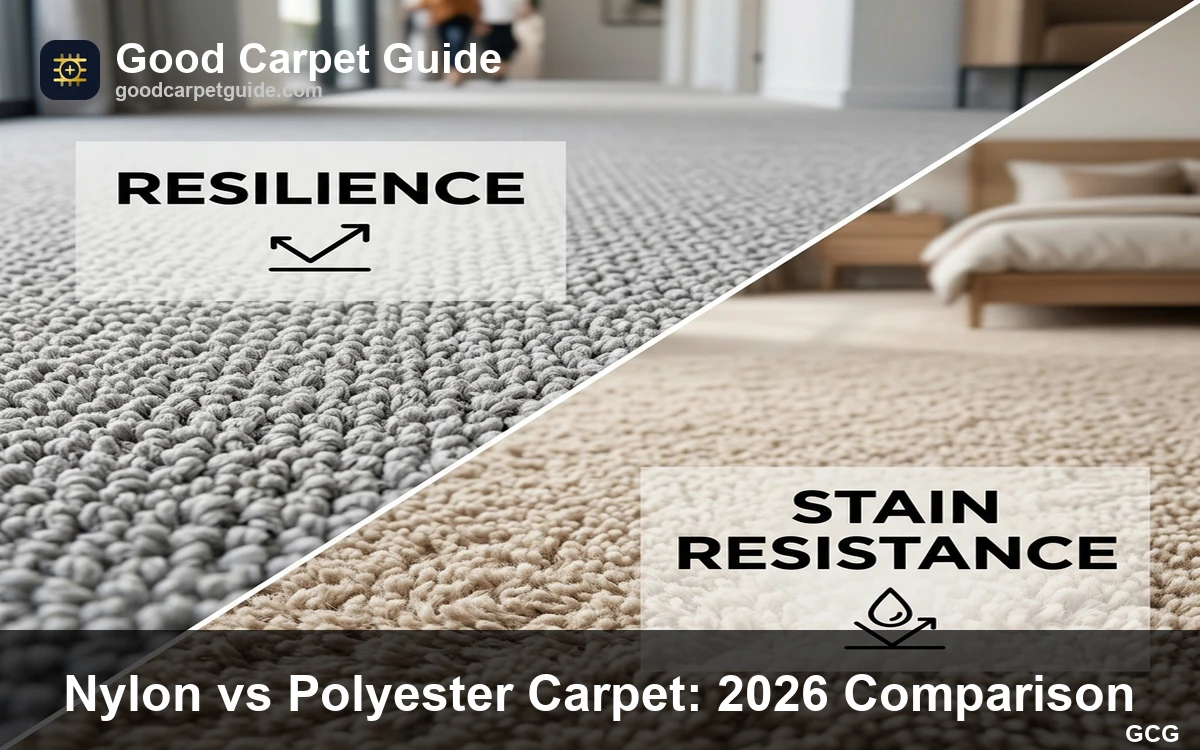
Nylon vs. polyester carpet performance depends on polymer resilience rather than yarn quantity alone. Nylon polymers contain hydrogen-bonded molecular chains that recover after compression. Polyester polymers permanently deform after repeated flexing.
A 35-ounce nylon carpet outperforms a 70-ounce polyester carpet in high-traffic residential applications. The performance difference comes from molecular recovery characteristics rather than carpet thickness.
Nylon fiber behaves like a resilient spring. Polyester fiber behaves like soft plastic under continuous pressure.
The distinction becomes obvious inside traffic lanes. Nylon fibers recover vertically after compression cycles. Polyester fibers remain bent after compression cycles. Permanent deformation creates visible matting, shading, and pile crush.
Manufacturers exploit polyester economics aggressively because polyester remains inexpensive to produce. Mills manufacture thick 60-ounce polyester styles while maintaining low wholesale costs. Consumers incorrectly interpret the extra weight as premium construction.
The actual lifecycle performance reverses:
| Carpet Type | Installed Cost | Expected Lifespan | Annual Lifecycle Cost |
|---|---|---|---|
| 60-oz PET Polyester | $4.50 / sq. ft. | 3–5 years | $0.90–$1.50 per year |
| 45-oz Nylon | $6.50 / sq. ft. | 12–15 years | $0.43–$0.54 per year |
The heavier polyester carpet costs more over time because replacement cycles accelerate.
Shaw’s Anso Nylon line demonstrates the difference between face weight and fiber chemistry. A Shaw Anso Nylon product such as Tonal Comfort Blue uses:
- 53.5-ounce face weight
- 0.69-inch pile height
- Density rating around 2,791
A 2,791 density rating still remains relatively soft for aggressive traffic. Nylon resilience partially compensates for the lower density because the polymer physically recovers more effectively than polyester.
Consumers comparing carpet fiber material characteristics should evaluate polymer resilience before comparing face weight numbers.
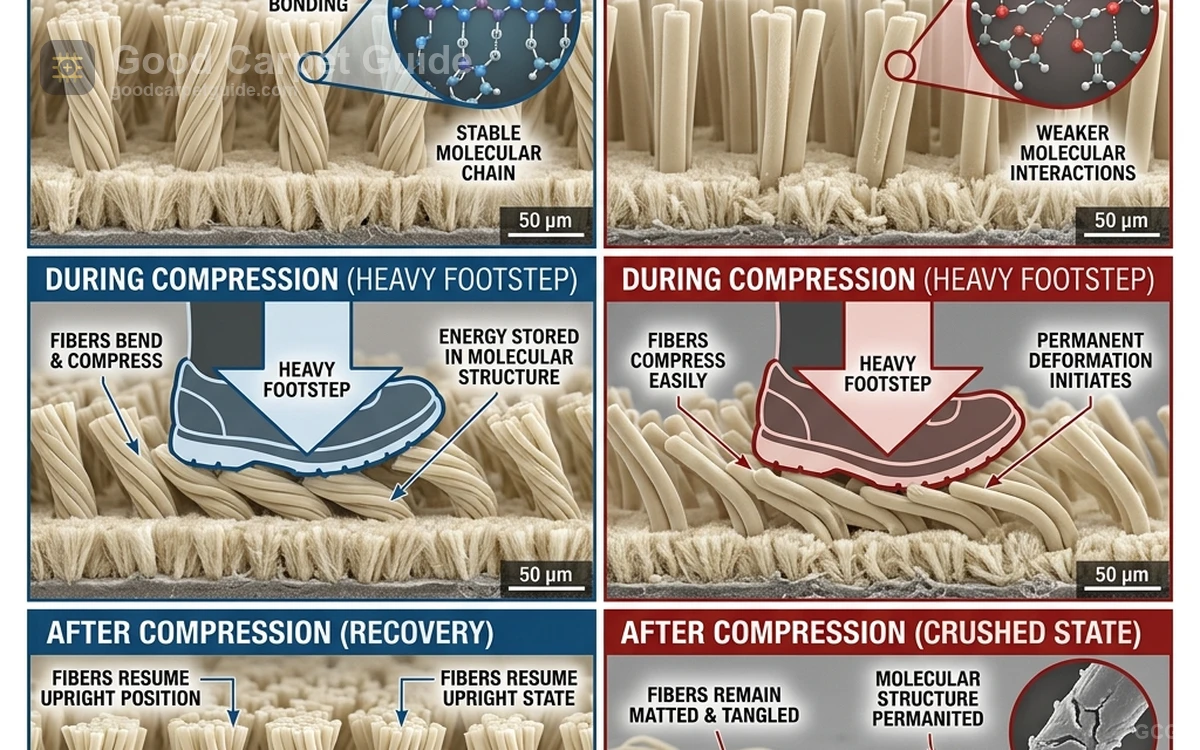
Nylon molecular recovery allows compressed fibers to rebound vertically, while polyester fibers remain permanently collapsed after repeated residential foot traffic cycles.
Why High Face Weight Creates Vacuuming and Cleaning Problems
High face weight carpet creates vacuum resistance because dense tall fibers trap airflow and increase suction drag against the vacuum head.
Some ultra-thick plush carpets physically seal against high-powered vacuum cleaners. The vacuum nozzle locks onto the carpet surface and becomes difficult to move. Excessive suction stresses both the carpet backing and the vacuum motor system.
Consumers frequently misdiagnose the resistance as “premium density.” The resistance actually results from excessive pile depth combined with restricted airflow escape.
Heavy polyester carpets create secondary cleaning problems during shampoo extraction. Dense plush fibers trap detergent residue deep inside the pile structure. Residual soap attracts soil particles aggressively and creates recurring gray traffic lanes.
Polyester also behaves as an oil magnet despite strong water-based stain resistance. Polyester fiber resists water because polyester is hydrophobic. Polyester simultaneously absorbs oily contaminants that oxidize and chemically bond to the fiber surface.
Oil contamination creates permanent discoloration that standard cleaning procedures fail to remove.
Consumers maintaining thick polyester carpet should:
- Maintaining strong dry soil removal through controlled vacuuming
- Maintaining low-moisture cleaning systems
- Maintaining immediate grease removal procedures
- Maintaining manufacturer-approved vacuum height settings
- Maintaining proper airflow beneath the vacuum head
Over-cleaning damages high face weight carpet almost as quickly as neglect.
To flush out embedded greasy soils and detergent residues from thick plush piles, standard vacuums fall short. A high-suction portable deep cleaner is recommended for periodic extraction.
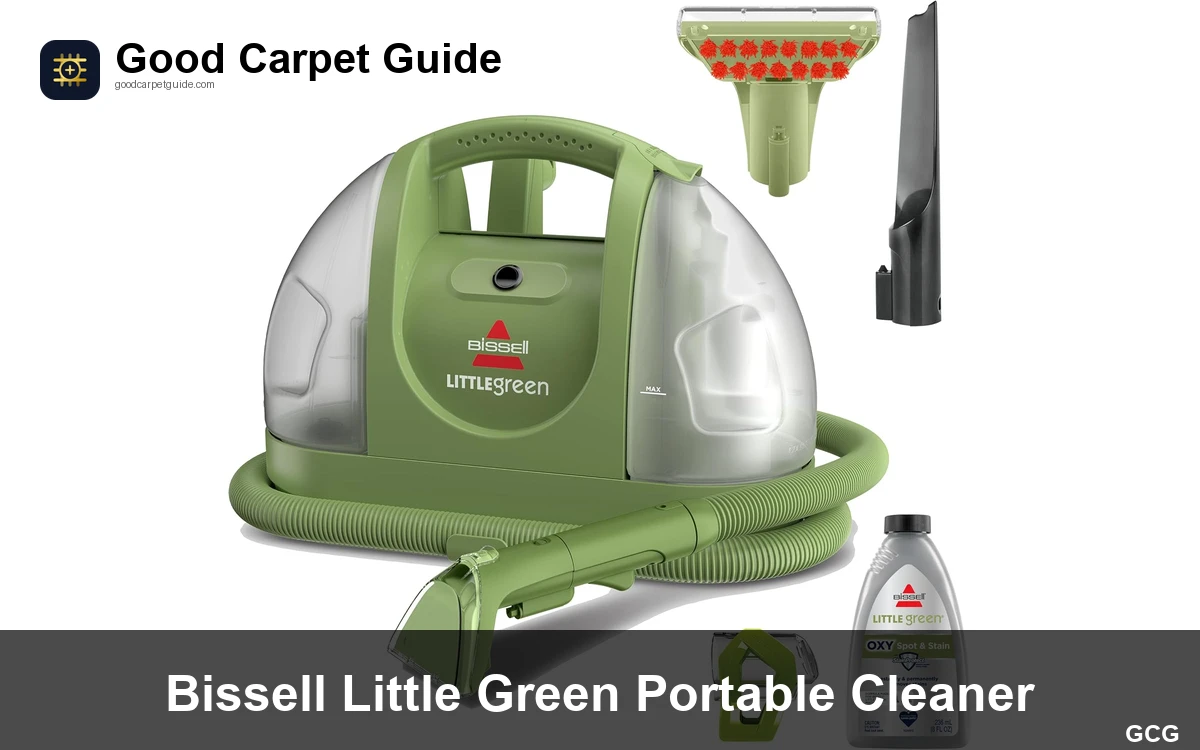
Bissell Little Green Portable Cleaner
Perfect for deep cleaning high-pile polyester and nylon carpets. Lifts embedded spots, oils, and soils that standard vacuums leave trapped in the backing.
Check Price on AmazonWhy Carpet Padding Determines Face Weight Performance
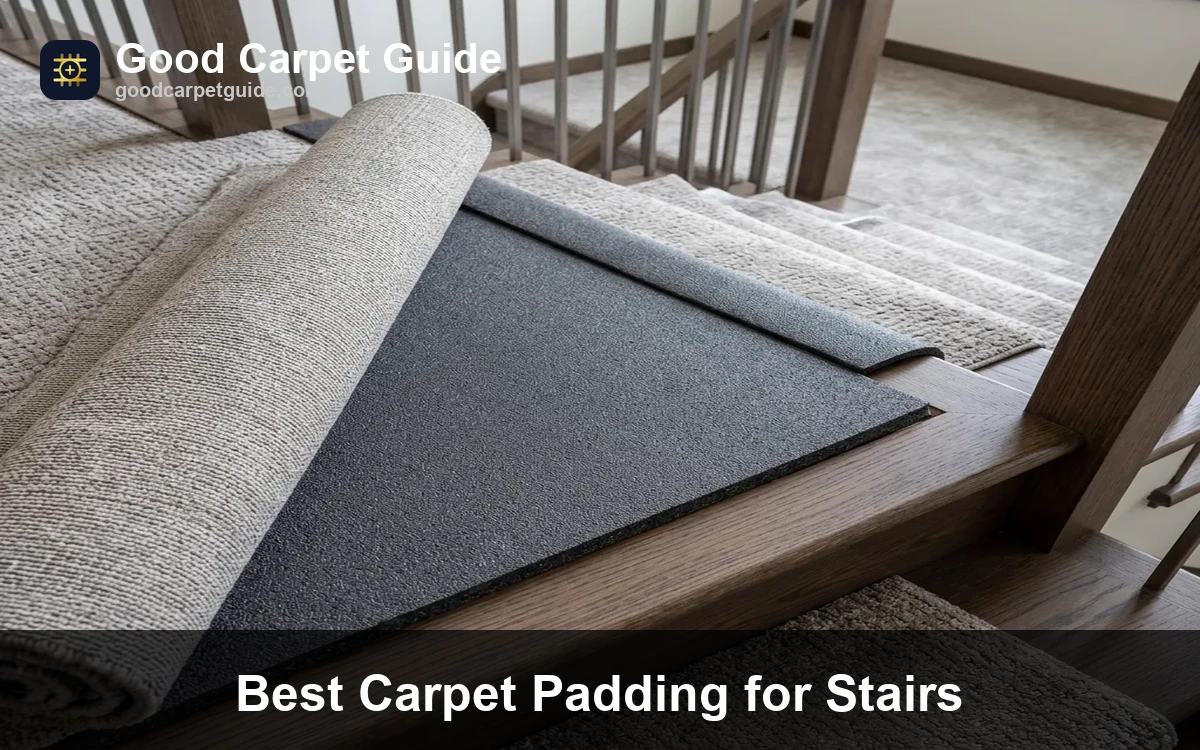
Carpet padding determines whether carpet backing remains stable under compression. Thick soft padding destroys heavy carpet by allowing excessive flex beneath the backing system.
Many homeowners attempt to create a “cloud-like” floor by pairing 60-ounce plush carpet with 0.5-inch soft cushion padding. Installers repeatedly document seam failure, backing stretch, and yarn separation in those installations.
Excessive padding thickness allows the carpet backing to flex during every footstep. Repeated flexing weakens tuft bind strength and separates yarn bundles at the primary backing interface.
Professional installers instead recommend:
- Maintaining 8-lb rebond density beneath residential carpet
- Maintaining moderate cushion thickness rather than extreme softness
- Maintaining stable underfoot support beneath heavy carpet
- Maintaining manufacturer-approved cushion specifications
Consumers researching selecting high-density carpet padding or comparing 8lb vs 10lb padding should prioritize structural support instead of softness marketing.
Padding density matters more than padding thickness for long-term carpet stability.
For active family rooms and hallways, a high-density 10lb rebond padding provides the ultimate foundation to prevent both nylon and polyester fibers from crushing permanently.
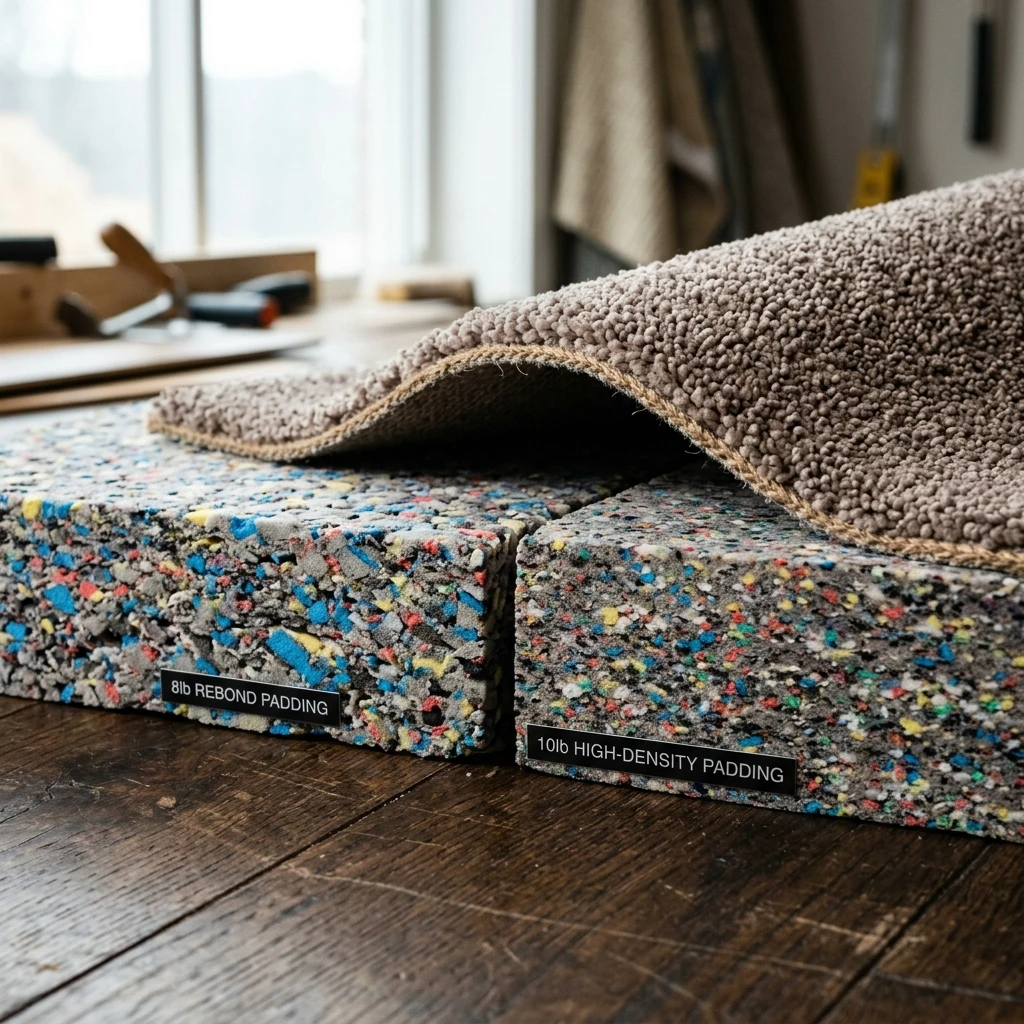
Future Foam 10lb Rebond Cushion
Recommended by flooring professionals for stairs, halls, and active family rooms. Delivers superior IFD support to prevent vertical fiber collapse.
Check Price on AmazonHow Retailers Manipulate Carpet Specifications
Retailers manipulate carpet specifications by hiding technical data sheets, private-labeling identical products, and advertising “total weight” instead of face weight.
Consumers attempting direct comparison shopping encounter several deceptive tactics:
Combining Face Weight With Backing Weight
Some retailers advertise total carpet weight including backing materials. The inflated number appears larger despite offering no improvement in fiber durability.
Hiding Density Specifications
Some retailers prominently display face weight while omitting density ratings entirely. Consumers lose the ability to evaluate structural construction.
Creating Private Label Product Names
Manufacturers frequently rename identical carpet styles for different retailers. Private labeling prevents direct online comparison of specifications and pricing.
Selling Polyester as Luxury Material
Retailers market ultra-heavy polyester as premium luxury flooring despite polyester remaining substantially cheaper than nylon fiber.
Independent flooring retailers consistently report that standard 40–50 ounce polyester frieze materials should retail around $0.99–$1.50 per square foot before installation. Large retailers frequently increase pricing beyond $2.39 per square foot by emphasizing thickness rather than durability metrics.
Consumers evaluating carpet should request the complete specification sheet including:
- Face weight
- Density rating
- Twist count
- Fiber type
- Pile height
- Tuft bind data
- Cushion recommendations
A retailer refusing to provide technical specifications signals a product-quality problem.
Carpet Face Weight Recommendations by Use Case
Different rooms require different carpet construction priorities. Face weight alone never determines the correct specification.
Use Lower Face Weight Nylon for Hallways and Stairs
Use 30–45 ounce nylon with high density and aggressive twist for hallways, stairs, and family rooms. Traffic concentration requires structural resilience rather than deep plush softness.
Use Moderate Plush Carpet for Bedrooms
Use 40–50 ounce carpet with balanced density for adult bedrooms with lower traffic exposure. Moderate softness performs adequately in controlled environments.
Use High Density Frieze for Active Families
Use tightly twisted frieze carpet for homes with children, pets, and continuous foot traffic. Frieze construction resists visible tracking substantially longer than loose saxony plush.
Use Polyester Only for Low-Traffic Budget Installations
Use polyester in guest rooms, staged homes, or temporary installations where replacement expectations remain short-term.
Use Proper Cushion Support Under Heavy Carpet
Use 8-lb rebond cushion beneath most residential carpet systems. Stable underlayment protects tuft bind integrity and reduces backing flex.
Carpet face weight becomes meaningful only after evaluating density, twist count, fiber chemistry, and underlayment support together inside the same flooring system. A lighter engineered carpet routinely outlasts a heavier plush carpet because structural mechanics determine durability more accurately than yarn mass alone.