Most homeowners think carpet failure starts in the middle of the room—traffic lanes, stains, pet accidents.
Installers know better.
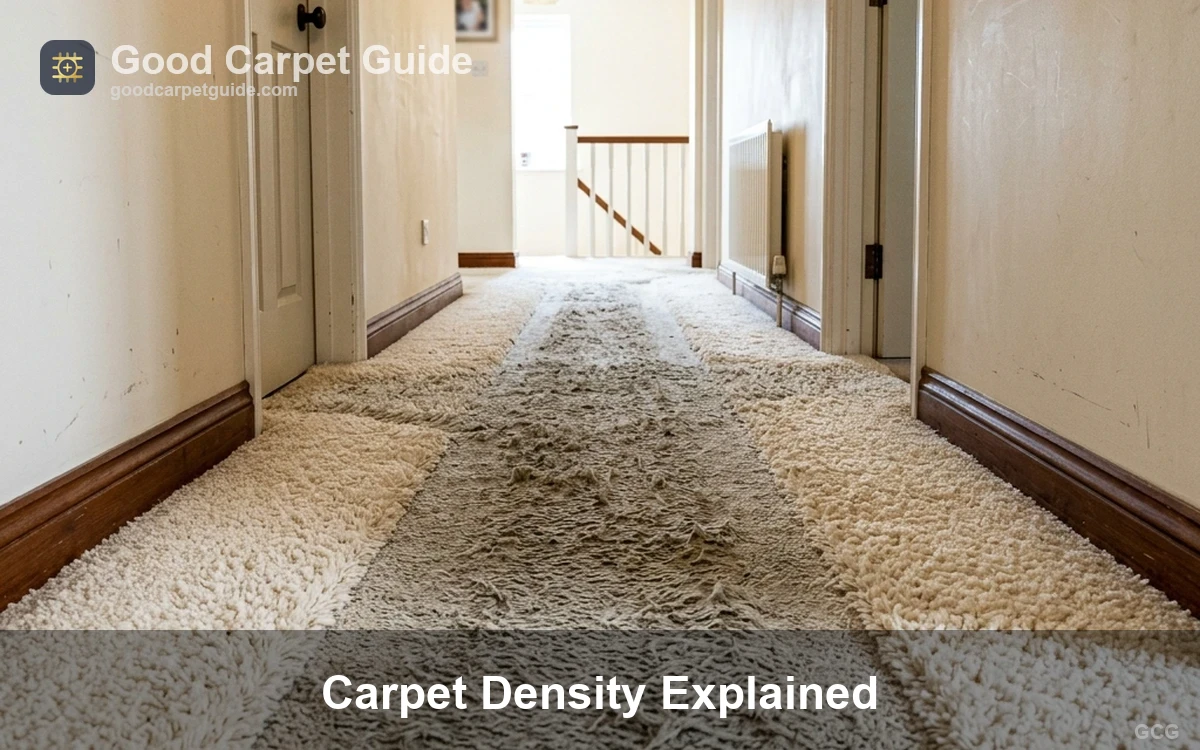
Carpet systems fail at the perimeter first.
The tack strip is not an accessory. It is the structural anchoring system that determines whether a floor stays flat for 15 years—or turns into a rippled, odor-locked biofilm reservoir within 18 months.
If you understand tack strips, you understand carpet biomechanics.
If you ignore them, you end up chasing “mystery waves,” “ghost odors,” and edge delamination that no cleaning system can reverse.
The Perimeter Problem: Why Carpet Fails at the Edge First
The edge of a carpet system is where all forces terminate.
Every step, every vacuum pull, every thermal expansion cycle resolves at the perimeter. That load is transferred into a deceptively small engineered interface: the tack strip.
This is where three systems collide:
- Mechanical tension from installation (power stretch load)
- Hygroscopic moisture migration from pad/subfloor
- Lateral shear forces from foot traffic and furniture drift
When any of these exceed the strip’s grip threshold, failure begins.
Not in the center.
At the wall line.
And if pets are involved, the perimeter becomes something worse: a pet odor trap zone, where urine vapor, ammonia compounds, and microbial VOCs accumulate in the compression gap between carpet backing and tack strip.
Installer Warning: If you ever smell “clean carpet” but detect persistent ammonia near baseboards, you are not dealing with surface contamination—you are dealing with subfloor and perimeter wicking failure.
Historical Context: The 1938 Tackless Revolution That Changed Flooring Forever
Before 1938, carpet was installed using direct tacking—manual nail fixation through the face or edge of the textile.
It was rigid, low-tension, and failure-prone.
Then Roy Roberts introduced the tackless strip system.
Despite the name, it is not “tackless.” It is *strategically tacked wood engineering*.
The innovation was structural decoupling:
- The anchor (strip) is separated from the carpet face
- Tension is distributed across a mechanical grip system
- Carpet can be stretched under controlled pre-load (power stretching)
This enabled:
- High-tension installations (1.5%–2% stretch)
- Wall-to-wall uniform compression
- Reduced rippling over long spans
The real breakthrough was not convenience.
It was load redistribution engineering.
Engineering the Strip: 5-Ply Lamination, Pin Geometry, and Shear Resistance
A tack strip is not a wooden slat with nails.
It is a laminated structural beam designed for lateral shear resistance under dynamic textile load.
5-Ply Alternating Grain Construction
Most premium strips use 5-ply kiln-dried hardwood (birch or poplar). The grain alternates direction in each layer.
Why?
Because carpet tension creates lateral shear stress, not vertical compression.
If grain direction were uniform, the strip would:
- Split under stretcher load
- Warp under humidity cycles
- Lose pin alignment integrity
The alternating grain structure prevents micro-fracture propagation.
Pro Tip: Inferior 3-ply strips often fail not by breaking, but by “slow twist”—a microscopic warping that gradually changes pin angle and reduces grip strength over time.
Pin Geometry: E-Pins vs J-Pins
Pin design determines carpet compatibility.
- E-Pins (7/32”): Standard tufted synthetic carpets
- J-Pins (5/32”): Low-profile woven or thin-back carpets
- Architectural pins (1/4”): High-tension commercial installs
The angle of the pin is not cosmetic—it is a friction vector system.
Pins are angled toward the wall so carpet backing is forced into increasing resistance as tension rises.
This creates a self-locking mechanism under load.
Subfloor Pathophysiology: When Flooring Becomes a Biological System
Carpet failure is often blamed on “wear.”
In reality, many failures originate in the subfloor long before installation.
The most destructive agent is not water—it is uric acid crystal formation from pet urine.
The Chemistry of Destruction
Pet urine breaks down into:
- Urea
- Uric acid crystals
- Ammonia compounds
- Mercaptans (odor molecules)
- Microbial VOCs
Once dried, uric acid crystallizes inside wood pores.
These crystals are:
- Highly stable
- Insoluble in standard cleaning agents
- Deeply embedded in cellulose structure
But the real problem is not static contamination.
It is hygroscopic reactivation.
Hygroscopic Reactivation (Critical Failure Mechanism)
Uric acid crystals absorb atmospheric moisture.
On humid days:
1. Crystals absorb water
2. Microbial activity reactivates
3. Ammonia gases are released
4. Odor returns—even after cleaning
This is why “cleaned” carpets still smell months later.
The system is not cleanable at surface level.
It is chemically embedded in the substrate.
Installer Warning: If urine contamination reaches the subfloor, encapsulation with shellac-based primers (e.g., Zinsser B-I-N) is not optional—it is structural remediation.
The Physics of the Gully: Why 1/4” Determines Everything
Between the tack strip and the wall exists a critical engineered void: the gully.
Standard specification:
- 1/4” to 3/8” spacing
This gap is not empty space.
It is a compression chamber.
Compression Fit Mechanics
When carpet is power-stretched:
- Backing is forced into the gully
- Pins penetrate backing at a controlled angle
- Tension is locked into mechanical resistance
If the gully is too wide:
- Carpet loses compression engagement
- Sliding occurs under shear load
- Ripples form within weeks
If too narrow:
- Carpet cannot fully seat
- Edge buckling occurs
- Premature zippering at seams
Pro Tip: A properly engineered gully feels “invisible” during tucking—but produces a noticeable resistance threshold when inserting the carpet edge.
Installation Masterclass: Power Stretching vs Knee Kicking
Installation is not placement.
It is tension engineering.
Step 1: Anchoring with Knee Kicker
A knee kicker is not a stretching tool.
It is a positioning device used to:
- Engage initial tack strip grip
- Align directional layout
- Stabilize carpet before mechanical tension
Step 2: Power Stretching (The 1.5%–2% Rule)
The power stretcher is the structural core of installation.
Pro Tip: If you are installing a high-quality Nylon vs Polyester carpet , remember that nylon fibers require a more aggressive 2% stretch to maintain their shape, whereas polyester is slightly more prone to 'relaxing' over time.
It applies longitudinal tension across the entire room span.
For synthetic tufted carpets:
- Minimum stretch: 1.5%
- Optimal stretch: 2%
This pre-load prevents:
- Future rippling
- Thermal expansion buckling
- Traffic-induced wave formation
Long rooms (>30 ft) require architectural-grade strips like The Sofa Source Metal Tack Strip or reinforced systems such as M-D Building Products 75093 (wood/concrete compatibility).

M-D Building Products 75093 (Concrete & Wood)
High-performance dual-purpose tack strip for both concrete and wood subfloors.
Check Price on Amazon
The Sofa Source Metal Tack Strip
Commercial-grade metal tack strip for high-tension environments.
Check Price on AmazonInstaller Warning: Any installation relying solely on knee kicking in large rooms guarantees latent rippling. It is not a question of “if,” but “when.”
Step 3: Trimming and Tucking
Final compression determines long-term stability.
Tools used:
- Wall carpet trimmer (depth calibrated)
- Non-marring tucker
- Heat seaming iron (for edge stabilization)
The carpet must be forced into the gully until backing fully engages pin geometry.
No floating edges are acceptable.
Tool Ecosystem: Precision Matters
Professional installations depend on tool synergy:
Installer Warning: Stair installations require a specialized tack strip alignment to prevent edge collapse. For a deep dive on how to support your perimeter on vertical steps, see our Best Carpet Padding for Stairs guide.
- Power stretcher (tension system)
- Knee kicker (alignment system)
- Heat seaming iron (bond integrity)
- UV light (contamination mapping in restoration)
- Moisture meter (subfloor diagnostics)
For curved upholstery transitions and edge control systems, flexible tack solutions like The Sofa Source Flex-Grip Three-Tooth are used in specialty installations where rigid strips fail under geometry constraints.
Troubleshooting: When the System Fails
1. Carpet Ripples
Root causes:
- Under-stretching (<1.5%)
- Gully over-width (>3/8”)
- Subfloor moisture expansion
Result: wave propagation under traffic load.
2. Zippering at Seams
Occurs when:
- Edge sealing is skipped
- Seam tape bonding fails
- Lateral shear exceeds seam strength
Solution: heat reactivation and edge resealing.
3. Sprouting Tufts
Mechanical cause:
- Excessive pin penetration or backing damage during stretching
Chemical cause:
- Fiber weakening from microbial contamination
4. Edge “Dirt Magnet” Syndrome
The most misunderstood failure mode.
Pro Tip: To prevent the 'dirt magnet' effect near your baseboards, avoid DIY soap mixes. Using a professional carpet stain remover ensures that no sticky residues are left to trap perimeter dust.
Cause:
- Compression gap misalignment
- Micro-airflow trapping particulate debris
Once formed, it behaves like a permanent sediment zone.
Moisture, Padding, and Hidden Perimeter Rot
Tack strip failure is rarely isolated.
It is often connected to pad saturation.
Moisture travels:
- From carpet surface
- Into padding
- Down to subfloor
- Laterally into tack strip wood
This is why pad selection is critical. Systems designed for pet resistance and vapor control (like those discussed in the [ Best Carpet Padding for Pets Guide ](https://goodcarpetguide.com/best-carpet-padding-pets)) directly influence tack strip longevity by controlling vapor migration and microbial load.
When padding fails, tack strips rot from the inside out.
Health, Safety, and Decontamination Reality
Once carpet systems are exposed to:
- Mold (*Stachybotrys chartarum*)
- Urine saturation
- VOC accumulation
They transition from flooring to bio-contaminated textile systems.
Risks include:
- Spore aerosolization during removal
- Ammonia inhalation exposure
- Subfloor microbial reservoirs
At this stage, restoration is not cosmetic—it is environmental remediation.
Final Insight: The Perimeter Decides Everything
Carpet longevity is not determined by color, fiber type, or brand.
It is determined by:
- Tack strip engineering
- Gully precision
- Tension calibration
- Subfloor chemistry control
The carpet is only as stable as its perimeter anchoring system.
And the perimeter is only as strong as its most ignored component.
The tack strip.
If installed correctly, it disappears for 15 years.
If installed incorrectly, it becomes the origin point of every failure mode in the room.
Ripples. Odors. Delamination. Edge collapse.
Everything starts there.